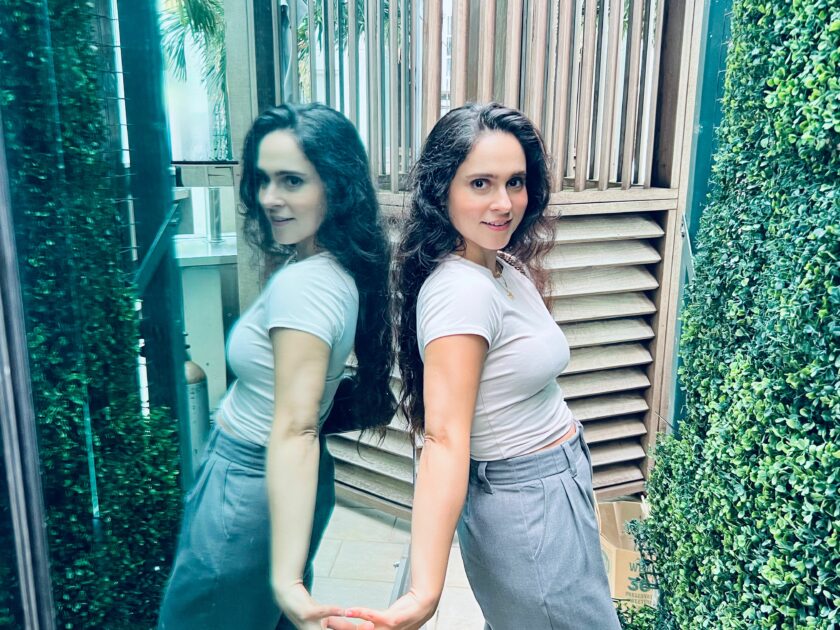
 Months ago, a journalist reached out with the intent to interview me. I emailed back my answers and made myself available for any follow up questions. Simply put, they blew me off a few times and finally ghosted. Not the first time someone in communications has done this and it probably won’t be the last. Whatever the motive, I have omitted their name and news publication cause I don’t really care for drama. That would truly be a waste of time. Below is the full, unedited interview. Los quiero.
- How would you describe your relationship to Cuba and to the Cuban-American diaspora you’re part of?
It may be trauma bonding. I enjoy obsessing over that island and go around trying to educate non-Cubans about it, despite having lived there only 6 years. Because of my parents’ political actions, I only experienced a brief childhood in Cuba from the ostracized and persecuted perspective. However, growing up in Miami shielded me from further experiencing frustrations on the island. I suffered enough to have a personal relationship with the country, yet remained physically detached enough to romantically believe in its future. I cherish my bittersweet Cuban American identity.
- You also identify as Jewish—how has that shaped your sense of identity alongside your Cuban background?
My Jewish side contributed enormously to shaping my principles around tolerance and respect for other people’s beliefs. Strong personal freedoms are sacred. I remember my mom explaining Sukkot to me in Cuba and telling me to never accept pork if anyone offered it. I was raised a little differently, so I expect society to be plural and respectful of our many differences. There is no monolithic way of living. It shocks me whenever I see flagrant attempts to homogenize our political, religious, or personal behaviors.
- You’ve spoken about growing up between exile and attachment to Cuba. How did that shape your political identity over time?
We were flown out in 1994 by the US government under the assumption of a lifelong exile, as political refugees. Parallel to that, I always heard everyone around me in this community talking nonstop about Cuba and often refusing to become legal citizens (extending their status as residents for decades) as they waited for a return that would never happen. Depending on what era you emigrated, you hold on to a specific Cuba locked in time and build upon those memories the future country you’d like to see. My family and I were heavily mistreated by the Cuban government in the past, and I was afraid for a long time. When exiled, you have a unique chance to analyze things as a more objective observer and thus cultivate more global perspectives. To understand a phenomenon, you have to take a step back to look at it from different angles.
- Do you see parallels between Cuban-American and Jewish diaspora experiences, particularly in how history and memory are carried forward?
The Cuban diaspora is very young, while the Jewish diaspora goes back thousands of years. I always found it fascinating how our most prestigious and efficient organization in Miami (The Cuban American National Foundation founded by Jorge Mas Canosa) was created as a near identical copy of AIPAC to essentially do the same thing but for a different ethnic group. Both communities have hierarchies within their respective immigrant origin stories and a concern over assimilation or intermarriage to a varying degree. However, the Jewish identity that has survived centuries of forced assimilation or persecution is very strong due to natural selection; Cuban heritage has simply not been tested like that. Its national idiosyncrasies are all at risk. Both communities have historically valued education and thus produce innovative thinkers. American Jews largely support the State of Israel, and it’s had enormous financial success. American Cubans have typically resented the Cuban Government and have lobbied to cripple its economy. Consequently, current politics aside, Israel invigorates the Jewish American community with strength and optimism through healthy engagement. This is an interesting difference – between organizing in support of a country and organizing in opposition to a regime.
- I read online that your father is Reinaldo Escobar. How did your father’s experience as a political prisoner influence your understanding of both the Cuban government and exile politics?
My father was the head organizer of an underground youth dissident group structured in secret cells. I was born after his traumatic first arrest. That means my perception of the world is through the lens of being a tiny, oppressed family. I am a contrarian by nature. It’s why I reject the notion that all exiles in Miami must think or behave in a certain way. If I lived on the island, as I’ve said before, I would undoubtedly be a full-blown dissident. My mother, by just being married to my father, was also fired from her work as a teacher and was expelled from continuing her degree at the University. Our past experiences taught me that no society is doing well if innocent individuals are systematically abused. I hate bullies, and they come in all shapes and sizes. I have challenged political orthodoxies in Miami because my parents fostered critical thinking in me as the best tool against abuses of power.
- What do you see as the most dominant historical narratives within the Cuban-American community in South Florida? Are there similarly dominant narratives within Jewish-American spaces that you’ve encountered?
The most dominant narrative down here is the one that everyone who escaped the dictatorship is a right-wing conservative looking for liberty. I have met socialists who fled because they disapproved of the Soviet influence, nationalists who disapproved of the US involvement on the island, and conservatives who outright disapprove of individual freedoms. The reason why nobody has ever controlled the exile community is because we don’t have a homogenous group-think but our elected officials and loudest nonelected leaders such as radio hosts or celebrities, do stick to a script to avoid controversy. People even comply with the narrative by faking personal wealth with their families to prove the typical immigrant story. Asylum laws further politicized thousands of immigrants who were technically fleeing for economic reasons but claimed persecution for legal status.
When German Jews arrived in America, they were generally more educated and better off than later waves of Eastern European Jews, so they helped set the tone for what being an American Jew was, even for those fleeing from Arab countries. Just like the Cuban community is defined partly by waves of immigration that reflected different social-historical eras on the island, the Jewish community includes highly assimilated and established individuals together with latecomers with different conceptions of Jewish identity.
- How have those narratives been shaped by earlier generations of exiles, and how are they passed down?
The first waves of exiles built the foundations of this community and they focused on communications. I grew up hearing them on the local radio channels and television where they focused on local politics, largely funded by many small local businesses. They were strategic in spreading a collective story that largely reflected their own struggles and aspirations. New arrivals don’t quite fit or share those original experiences, so they’ve been regarded with distrust, either due to loyalty or safety concerns or class disconnect. The main plotline remains the same but it’s become a caricature as it’s adapted to suit the new standard bearers who proliferate the social media landscape and are typically Cuban immigrants who arrived in the US as adults. Those of us raised here tend to shift our focus to American issues. I was the spokesperson for my dad’s nonprofit Grupo Caiman so I made a choice to be involved. If more Cuban Americans like me were to participate in the public discourse, there would be greater plurality of thought.
- In your view, how do these narratives continue to influence political behavior and voting patterns today?
They still influence politics the same as always. It’s a system that works to effectively get politicians funded and elected. Cuban Americans are very active in elections, and the mainstream voting preferences are encouraged daily, now heavily through social media conditioning. Miami rent is expensive and the familial culture promotes intergenerational living where older generations influence younger ones to vote in a certain way. It’s disheartening to see them adopt caudillismo mindsets once in Miami as if there was no other choice. Critical, independent thinking is more important than fitting into whatever dominant group happens to be on top.
- For both communities, what role have political institutions, media, or advocacy groups in Miami played in reinforcing a particular narrative about Cuba?
A big one. Cubans that were involved in the media and politics continued to work in their respective fields once in South Florida. A whole professional class of thinkers and doers relocated to the US without letting go of the goal of seeing Cuba free of communism. I too am a product of that Miami-based obsession over the island. We believe we have something valuable to contribute. I find that Jewish advocacy groups tend to have a more positive, constructivem vibe around community organizing, even when regarding Cuba. We don’t have on the Cuban American side anything equivalent to the Greater Miami Jewish Federation and that’s a shame. Most organizing revolves around resentful negativity or unrealistic expectations that I just don’t share.
- What does it look like, in practice, to question or unlearn dominant narratives within communities that are deeply shaped by historical trauma?
It’s a lifelong pursuit. In practice it means listening. A lot of listening. You must listen and understand before you can begin to question. It involves thorough research. Courage. A willingness to experience and provoke discomfort for the greater good. You will be disliked by some and challenged but risking temporary marginalization is the only way to help speed up the healing of that collective trauma. It means processing your personal history and cultivating a reconciliatory disposition. You can’t let the past stunt your progress. It all starts at the individual level. If the dominant narrative doesn’t serve people well, then toss it.
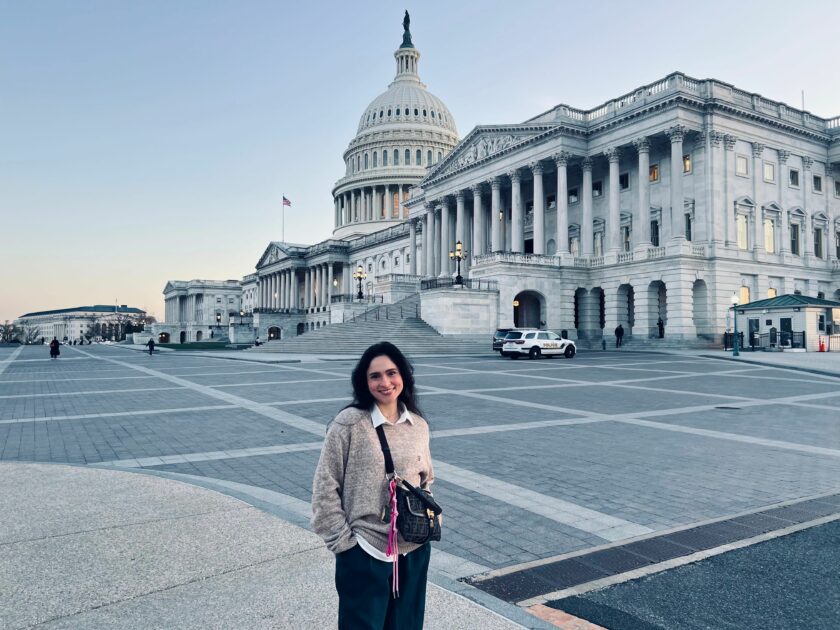
- Why did you decide to run for Congress? During your congressional campaign, did you feel pressure to align with established positions on Cuba or risk political backlash?
I was heavily involved in local political and environmental activism at the time, while also engaging in citizen journalism. Ultimately I was getting very frustrated at the real lack of tangible progress or meaningful power when organizing in South Florida. Instead of just protesting or reporting on problems, it made sense to go where lawmakers are. Once running, I received pressure from within the campaign to be more Leftist. Some supporters walked away when I refused to delete past photos wearing a Maga hat, with external forces pushing me to be more conservative and call Cuba a communist tyranny. The backlash came from the local Democratic party disavowing me and effectively clearing the way for my opponent (Mario Diaz-Balart) to win unopposed. The establishment cared more about publishing long editorials against how I didn’t fit under their umbrella than winning that election. Interviews were censored or never aired. My first printed campaign poster was violently destroyed overnight and the act of vandalism was anonymously posted online. These experiences were difficult, but they helped me to cement my democratic ideals.
- You’ve advocated for dialogue and normalization, what does it actually look like to challenge dominant narratives within your own community?
When you confront power, you risk defamation and isolation. It’s ironic that by advocating for dialogue I was mislabeled as a communist, yet right now, our very anti-communist Secretary of State Marco Rubio is doing the same thing. When you normalize relations, open markets, allow the use of financial tools and free flow of American travelers, you foster an independent middle class in Cuba. You cannot have a thriving democracy without the middle class. When you restrict or punish, you only hurt normal people because Cuban elites and government officials are not affected by these sanctions. Within my community, some have benefited financially by the current status quo, so when you put their questionable livelihoods at risk, they will fight back. We cannot expect change to come from those that have personally benefitted from the Cuban conflict, on either shore. It’s that simple.
 12. What kinds of backlash or risks have you faced for taking positions that diverge from more hardline views?
I have experienced very real hostility when sharing my ideas. Death threats, doxxing attempts, slander, defamation, people trying to get me cancelled, fired, or blacklisted in certain circles, etc. I was very young and vulnerable when I naively started advocating for things like national reconciliation. The way I was treated online and in person was very unfair and sometimes cruel. However, it reinforced in me a resiliency that doesn’t budge in front of arbitrary peer pressure. The likely effect of diverging from mainstream hardline views is maturing into an incurable defender of individual liberties. You double down on democracy.
- Do you see a generational shift in Cuban-American or Jewish-American spaces in how they think about Cuba, socialism, or U.S. policy?
Historically, Jewish American voters predominately supported the Democratic party. The Cuban-American interpretation of Kennedy’s role in failed Bay of Pigs invasion has meant they’ve put their hopes in a Republican invasion of the island, while preventing the spread of communist-allied sentiment in the US. Trump has courted the Jewish vote, and nowadays many former Democrats in the community feel unhappy with how the party addresses their concerns. A large percentage of young Miami Jews today support the current administration’s handling of antisemitism on college campuses and the Middle East crisis. Young Cuban Americans might not fixate on Fidel Castro like their grandparents, but both communities do share an updated rejection of the socialist bogeyman. Florida is no longer a swing state and with the influx of conservative leaning billionaires, it’s no longer quite so fashionable to lean leftist. Until AI sabotages young employees in white collar jobs in a substantial way, there is no indication of a generational flip on these issues.
- What strategies have you found effective in creating space for more nuanced or pluralistic conversations within the diaspora?
You must seek alternative funding when creating more pluralistic spaces. Traditional funding routes tend to support the status quo thinking so creativity and grit are important. To this day, the international shortwave radio show “Moderna” that I hosted is still the only Cuban radio show transmitted towards the island exclusively funded by Cubans. I enjoyed total creative freedom. Zero external, editorial pressure, unlike all the media funded directly or indirectly by the USAID or NED aimed at Cubans, which sometimes illegally influences our local community as well. You can also help modify other spaces as long as you stay genuine. Authenticity is an advocate’s best tool.
- How do you navigate conversations that are rooted in trauma, especially when discussing reconciliation or engagement with Cuba?
First, you must read the room. Essential emotional intelligence is more important than the greatest rhetorical arguments. Always exercise kindness and patience, without being condescending. You can share research, information or opinions only if the other party welcomes it. Even people that suffered the worst repression in Cuba in the early days of the Revolution, since most have already built a life in the US, can generally engage in thoughtful and honest conversations if you validate their pain. Unfair things happened, but we cannot punish new generations of Cuba on the island for what their grandparents did, or we are creating more injustice.
- Looking across both of your identities, what lessons do you think different diaspora communities can learn from each other about engaging with history more critically?
Don’t delay necessary conversations around painful subjects. In times of crisis, it’s even harder to analyze things critically. Certain tactics employed by family therapists or counselors can help when navigating conflict resolution such as recognizing the other side’s concerns. You can’t heal if your past pain is ignored, downplayed or denied. That’s hurtful and dangerous. Not to equate in any way the two experiences, but the trauma of history is the precise reason why Holocaust denial is so disturbing and horrifying. What’s stopping it from happening again? There are proven paths for processing our collective past. For example, I have met with modern German diplomats in Jewish spaces whose level of respect for the Jewish community is inspiring. Cuban and Jewish Americans have both experienced trauma and we both face challenges. We have the tools and people to build a better future, we just need the willpower to do it. It’s on us.